
Chabad of S. Maarten: A Kosher Lifeline in the Caribbean

Updated: Dec 27, 2025
Kosher Food in Sint Maarten ✈

I walked the short stretch of Billy Folly Road from The Villas at Simpson Bay to the Chabad House of S. Maarten. After three blocks of small storefronts, a plain cream-colored building marked by a Chabad sign and a mezuzah came into view. Inside, one practical multipurpose room serves as synagogue, community space, and kosher kitchen. I have picked up kosher meals from Chabad houses elsewhere - most recently in San Juan, Puerto Rico, and Santo Domingo in the Dominican Republic - and I was here to do the same.
Chabad - properly, Chabad-Lubavitch - is a Hasidic movement founded in 1775 by Rabbi Shneur Zalman of Liadi in what is now Belarus. Its name is an acronym for the Hebrew words for wisdom, understanding, and knowledge, signaling a focus on applied Jewish thought. Over the past two centuries the movement migrated from Eastern Europe to Brooklyn and then outward to every populated continent. More than 3,500 local centers now dot 100 countries, each directed by an emissary couple who provide Jewish education, communal prayer, and kosher food wherever Jewish infrastructure is thin.
Book a Tour: Top Sint Maarten Tours

“There are currently no kosher restaurants on the Dutch or French sides of the island, and the handful of local supermarkets stock only basic packaged goods. Chabad bridges the gap with a prepaid take-out menu - salads, schnitzel, grilled vegetables, challah, even Shabbat packages - prepared under the rabbi’s supervision.”
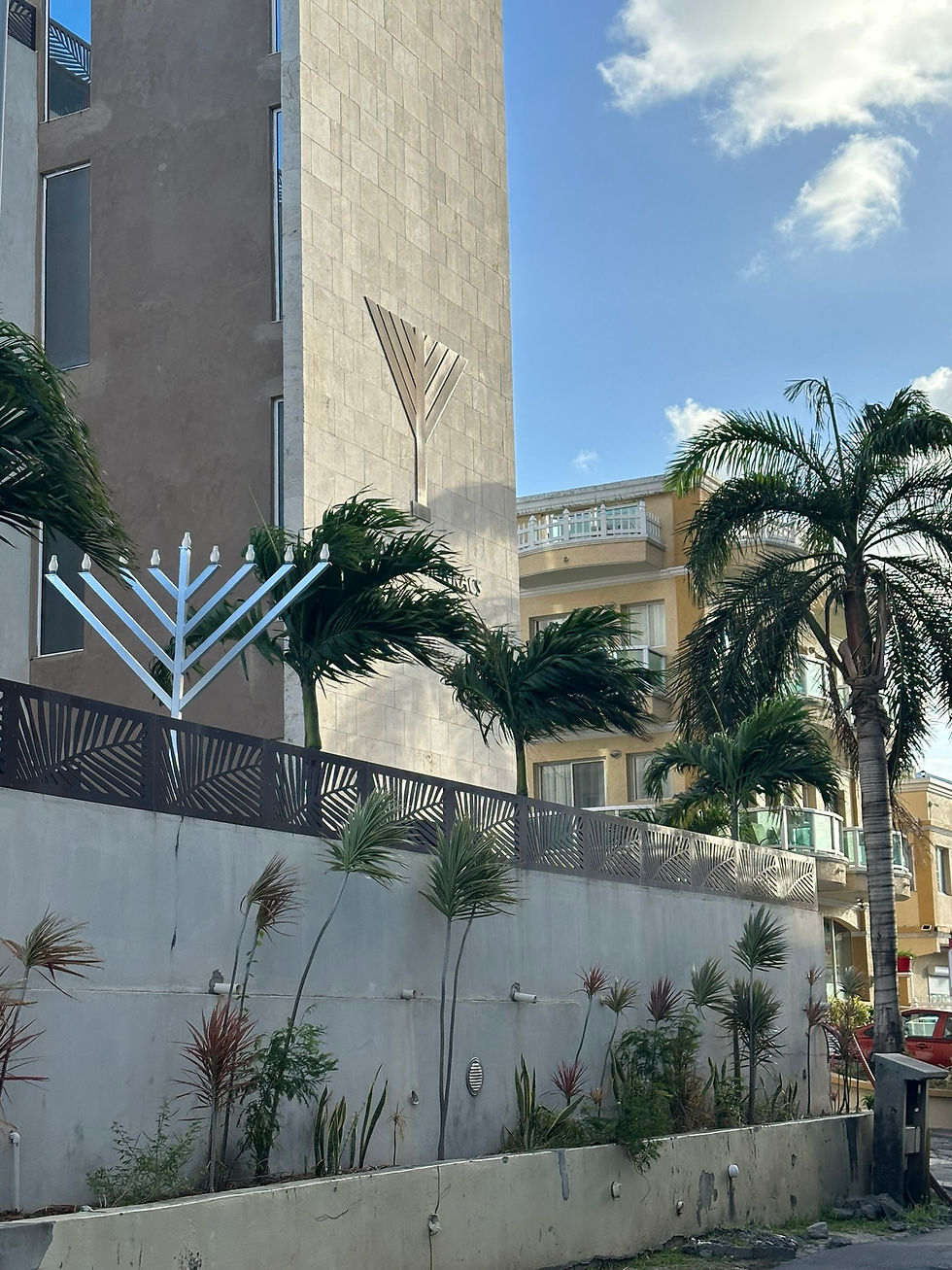
Those emissaries are usually called shluchim, and on Sint Maarten they are Rabbi Moishe and Rebbetzin Sara Chanowitz. They arrived in 2009, drawn by a community of about 300 year-round Jewish residents and a winter swell that pushes the number closer to 1,000 when cruise ships anchor in Philipsburg. The couple started in a one-bedroom apartment, hosting Friday-night dinners for travelers who had nowhere else to light candles. Two years later they secured a 1,200-square-foot space, consecrated it as the island’s first synagogue since the early 1800s, and opened a small mikvah in an adjoining wing.
Travelers quickly discovered another essential service: reliable kosher meals. There are currently no kosher restaurants on the Dutch or French sides of the island, and the handful of local supermarkets stock only basic packaged goods. Chabad bridges the gap with a prepaid take-out menu - salads, schnitzel, grilled vegetables, challah, even Shabbat packages - prepared under the rabbi’s supervision. Orders placed seventy-two hours in advance can be picked up at the center or delivered across the island for a set fee. I used the service during my stay at The Villas at Simpson Bay, adding some fresh homestyle food to the items I found at the Carrefour supermarket.
My walk to pick up the order led to a visit with Rabbi Chanowitz. We discussed the history of the Jews on the island, and he recounted how Hurricane Irma blasted the building in September 2017. Sustained winds over 180 miles per hour ripped away sections of the roof, shattered the office window, and left the family’s home uninhabitable. The rabbi, his wife, and their five children sheltered in the mikvah room - reinforced concrete walls, no exterior glass, and its own water supply. When the storm finally moved north, they emerged to find much of Simpson Bay flattened. Within two days the Chabad kitchen was back in operation, turning limited ingredients into hot meals for neighbors who had lost electricity and for tourists stranded at damaged resorts.

That story of endurance fits into a longer arc of Jewish life on Sint Maarten. Sephardic merchants from Curaçao and St. Eustatius established a congregation here in the 1780s. They built a wooden synagogue behind what is now Front Street in Philipsburg, near the Courthouse. A hurricane in 1819 destroyed the building and scattered the small community. By the mid-nineteenth century no organized Jewish life remained. Local historians believe the synagogue’s eastern ballast-stone wall still lies in a fenced garden behind the Sint Maarten National Heritage Museum, hidden by tropical foliage and modern construction.
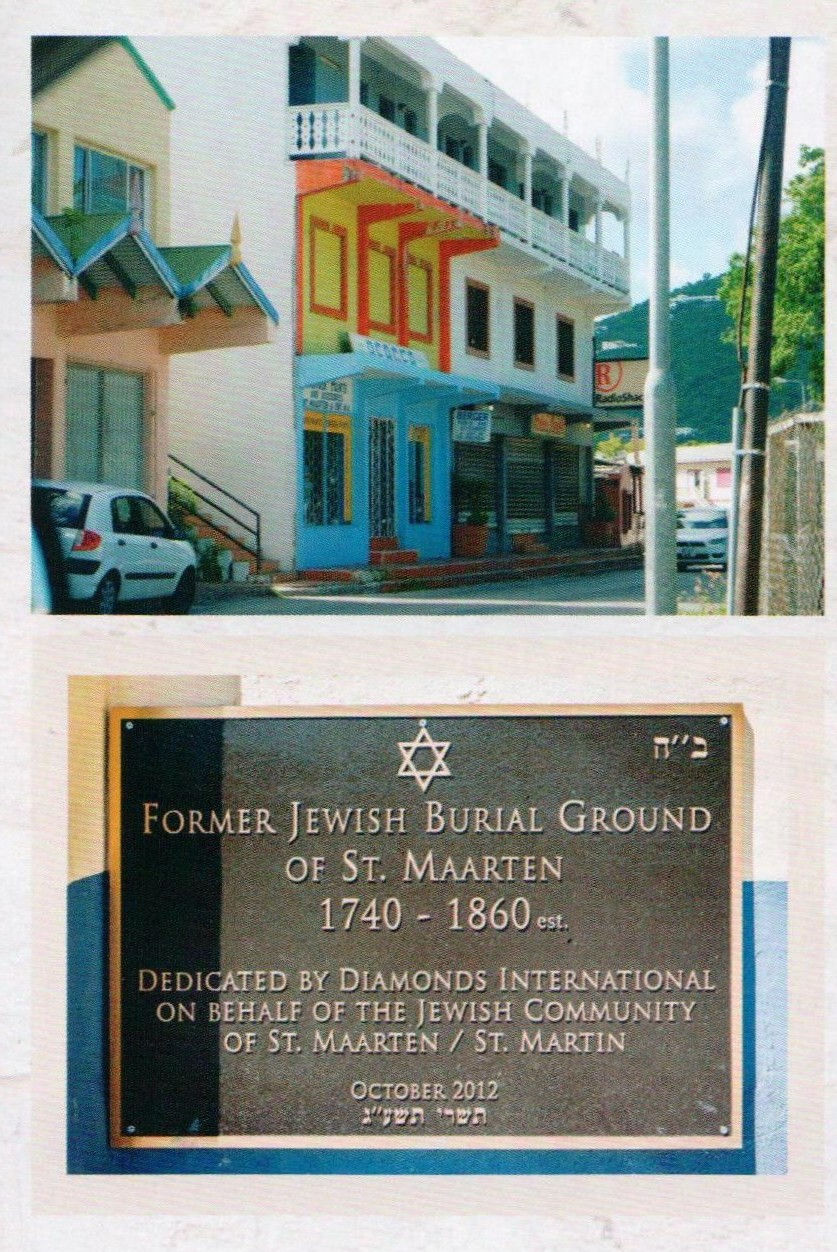
Evidence of the community’s burial ground surfaced in an unlikely place: under a two-story concrete block that once housed a Radio Shack on Longwall Road. Archaeologist Jay Haviser documented human remains and marble fragments during a 2012 rescue dig conducted before a renovation. The find confirmed oral histories of a Jewish cemetery in the area and spurred the museum to create a small exhibit on the island’s early Jews.
Permanent Jewish presence returned only in 1964, when a handful of North American retirees settled on the Dutch side. For decades they relied on visiting rabbis for holiday services. The appointment of the Chanowitzes transformed the landscape. Today a daily morning minyan meets year-round, classes for children run twice a week, and students from the American University of the Caribbean in nearby Cupecoy drop by for Thursday-night pizza - baked, of course, in a kosher oven.
When one thinks of Chabad, it’s hard not to think about Rabbi Menachem Mendel Schneerson. Universally known simply as “the Rebbe,” he took the helm of Chabad-Lubavitch in 1951 after the passing of his father-in-law, the sixth Rebbe. Born in 1902 in what is now Ukraine and educated in Berlin and Paris, he brought a technical mind and broad secular education to the movement. From a small office at 770 Eastern Parkway in Brooklyn he directed a global campaign that viewed every Jew, no matter how remote, as part of one family. Within his first decade he dispatched young married couples to Morocco, Australia, and Alaska; today their successors manage more than three thousand local centers.
The Rebbe framed each outpost as a place where anyone could pray, study, and obtain kosher food, a model that led me to Chabad houses around the world long before I set foot on Sint Maarten. He pushed for visible Jewish practice in the public square: public menorah lightings, tefillin stands on street corners, and campus fellowship programs. American presidents have marked his birthday, 11 Nissan on the Hebrew calendar, as “Education and Sharing Day” in recognition of his call for moral instruction. Although he passed away in 1994 and left no successor, his talks, letters, and decisions serve as the operational manual for every shliach, including Rabbi Moishe Chanowitz. When the rabbi here labels a take-out tray for a guest at a local resort, he is carrying out a system the Rebbe devised to ensure that even the farthest traveler can keep kosher and feel at home.

When I walked back toward Simpson Bay the streetlights flickered over new condo projects rising beside cinder-block homes. It struck me that the Chabad house behind me stands on deeper foundations than its modest façade suggests. It carries forward the lineage of the Sephardic traders who once kept Torah scrolls on Front Street, of the unnamed Jews laid to rest beneath the former electronics store, and of the pioneers who rebuilt after the most powerful storm in Caribbean history. For contemporary travelers it provides something equally important: the assurance that kosher food, a familiar prayer space, and a warm Shabbat welcome are available even in a corner of the globe better known for beaches than for bimahs.
Book a Tour: Top Sint Maarten Tours


Comments